The best sleeping positions for lower back pain keep your spine and pelvis in a neutral, supported alignment. For most people, that means sleeping on your side with a pillow between your knees, or on your back with a pillow under your knees. The right choice depends on what is causing your pain.
How Sleeping Position Affects Lower Back Pain
You spend roughly a third of your life in bed, so your sleeping posture matters. Certain positions put unnecessary strain on the neck, hips and back, which can worsen or even cause back pain. Twisting the spine, letting the hips sag or arching the lower back overnight keeps the muscles, discs and joints under load when they should be recovering.
Pain also disrupts sleep, and poor sleep can heighten pain sensitivity, creating a cycle. A supportive position helps break it by reducing mechanical stress on the lumbar spine.
Sleeping Positions for Lower Back Pain
Four sleeping positions are commonly recommended for lower back pain, and each one works by keeping your spine and pelvis supported while you rest.
Step 1: Side With A Pillow Between The Knees
A review found that side sleeping with pillows, or alternating between supported side-lying and back positions, may help prevent or reduce low back pain. The pillow keeps the hips and pelvis level and limits spinal rotation. Choose a firm pillow, or a rolled towel, and keep the knees slightly bent.
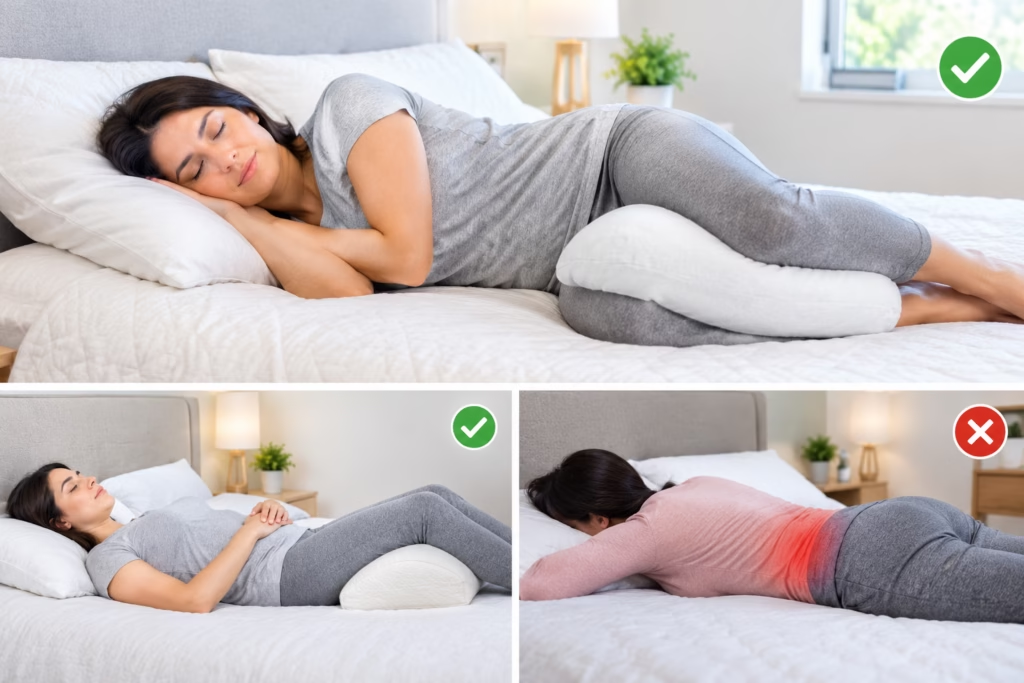
Step 2: On Your Back With A Pillow Under The Knees
Placing a pillow under the knees spreads body weight more evenly and reduces stress on the lumbar spine. It helps maintain the natural curve of the lower back. If the lumbar curve feels unsupported, add a small rolled towel beneath it.
Step 3: Fetal Position
Lying on your side with the knees drawn gently toward the chest can ease pain linked to disc problems. Avoid curling too tightly, and alternate sides.
Step 4: On Your Stomach, Only If Necessary
Stomach sleeping is hard on the back and generally not recommended for people with lower back pain. If it is the only position you can sleep in, place a pillow under your pelvis and lower abdomen and use a flat pillow, or none, for your head.
Try each position for a few nights and keep the one that leaves you with the least stiffness in the morning.
Best Sleeping Position by Condition
The best position depends on what is causing the pain. The guidance below is general, so check it against your own comfort and your clinician’s advice.
Herniated or Bulging Disc
Many people find relief on their side in a mild fetal posture, or on their back with the knees supported, because both positions reduce pressure on the lumbar discs. Avoid positions that increase pain when you bend forward or arch backward, and test which one calms leg or back symptoms.
Sciatica
Sleep on your side with a pillow between the knees, with the painful leg on top. Resting on the painful side can compress the irritated nerve. If lying on your back feels better, keep the knees elevated.
Spinal Stenosis
Slight forward flexion often eases symptoms, since leaning forward opens up space around the nerves. Try the fetal position, or lie on your back with the head and knees raised on pillows. Reclining at a mild angle helps some people.
Muscle Strain and Lumbar Sprain
Side-lying with a pillow between the knees, or back-lying with knee support, takes load off irritated muscles. Avoid stomach sleeping, which can hold the lower back in extension and prolong stiffness.
Sacroiliac (SI) Joint Pain
Lie on your back with the knees supported, or on the side that does not hurt with a firm pillow between the knees. Keep the legs aligned and avoid crossing the top leg, which twists the pelvis.
Every back condition is different, so use these positions as a starting point and adjust based on what eases your symptoms, with professional guidance if the pain persists.
Best Sleeping Positions for Specific Groups
Your body shape, age and life stage all change what a supportive sleeping position looks like, so the best setup for one person may not suit another.
Pregnancy and Lower Back Pain
Side-lying is generally the most comfortable and recommended position in later pregnancy. Use a pillow between the knees, and another under the belly if needed. A full-length body pillow can support the whole side of the body. Check with your midwife or doctor about the best side to sleep on.
Older Adults
Joint stiffness, arthritis and spinal stenosis are more common with age, so a gently flexed position often helps most. Side-lying with knee support or a slightly raised head and legs works well. Choose a mattress that is easy to get in and out of to avoid morning strain.
Side Sleepers with Wide Hips or Shoulders
A wider frame can leave gaps between the waist and the mattress, letting the spine sag sideways. If there is a gap between your waist and mattress, a small pillow there adds support. Pick a mattress with enough give at the hips and shoulders, and a head pillow thick enough to keep the neck level.
Whatever group you fall into, small adjustments with pillows and positioning can make a real difference, and a healthcare professional can help you fine-tune them if your pain continues.
How Your Mattress Affects Lower Back Pain
The mattress should keep your spine neutral without feeling rock hard. Very firm models were once recommended automatically, but some evidence suggests that a medium-firm mattress is better for people with long-term lower back pain. There is no single best mattress or pillow for everyone with lower back pain.
Practical Checks:
- Side sleepers: your spine should look straight, not sagging or tilted.
- Back sleepers: you should feel support under the lumbar curve.
- Wear and tear: a mattress that sags in the middle or is more than 8 to 10 years old may be contributing to your pain.
Your mattress doesn’t need to be expensive or extra firm, but it should keep your spine aligned and feel comfortable, so test it for support, replace it when it starts to sag, and pair it with the right pillow positioning for the best results.
Common Mistakes People Make When Sleeping with Back Pain
Even with the best intentions, a few small habits can quietly undo your efforts, keeping your lower back sore night after night and slowing your recovery.
- Sleeping on the stomach without support, which hyperextends the lumbar spine.
- Skipping the knee pillow, which lets the top leg drop forward and twist the pelvis.
- Using a pillow that is too high or too flat, which tilts the neck and misaligns the spine.
- Letting the knees sag when back sleeping, which can aggravate pain.
- Lying on the same side every night, which can create muscle imbalance.
- Ignoring warning signs. Back pain with leg weakness, numbness, fever, or loss of bladder or bowel control needs urgent medical attention.
Avoiding these mistakes costs nothing and often makes a noticeable difference, but if your pain persists or comes with warning signs, don’t wait to get it checked by a healthcare professional.
Final Thoughts
For most people with lower back pain, the best starting points are side-lying with a pillow between the knees or back-lying with a pillow under the knees. Fine-tune from there based on your condition, body shape and mattress. Give any change a week or two before judging it. If pain persists, wakes you at night or spreads into your legs, see a doctor, physiotherapist or osteopath to find the underlying cause.
FAQs
What Is The Best Sleeping Position For Lower Back Pain?
For most people, side-lying with a pillow between the knees or back-lying with a pillow under the knees works best. Both keep the spine and pelvis in neutral alignment.
Is It Bad To Sleep On Your Stomach With Lower Back Pain?
It often is, because it can arch the lower back and strain the neck. If you cannot sleep any other way, place a pillow under your pelvis and use a very thin head pillow.
Should I Sleep With A Pillow Between My Knees?
Yes, if you sleep on your side. It keeps your hips level and stops the top leg pulling your spine into rotation.
Which Side Should I Sleep On With Sciatica?
Sleep on the side that does not hurt, with a pillow between your knees. Lying on the painful side can aggravate nerve irritation.
Is A Firm Mattress Best For Back Pain?
Not necessarily. Medium-firm is often more comfortable and supportive for long-term lower back pain, though personal preference matters.
How Long Does It Take To Feel Better After Changing Position?
Some people notice less morning stiffness within a few nights. Allow one to two weeks before deciding whether a new position helps.
Can Sleeping Position Cause Lower Back Pain?
It can contribute, particularly if you hold a twisted or unsupported posture for hours. It is rarely the only cause, so posture, activity and underlying conditions matter too.
Is It Okay To Sleep On My Back With Lower Back Pain?
Yes, as long as you support the knees and the natural lumbar curve. If your back feels worse flat, try raising the head and knees slightly.
What Is The Best Sleeping Position For A Herniated Disc?
Many people find side-lying in a gentle fetal position, or back-lying with raised knees, most comfortable. Choose whichever eases your symptoms.
When Should I See A Doctor About Back Pain At Night?
See a doctor if pain is severe, keeps waking you or follows an injury. Seek urgent care if you have leg weakness, numbness, fever or loss of bladder or bowel control.