Lower back pain in early pregnancy is usually caused by hormonal changes that loosen the ligaments and joints that support your spine and pelvis. It is common, and it is usually harmless. A few symptoms do need prompt medical attention, and this guide explains which ones.
Is Lower Back Pain Normal in Early Pregnancy?
Yes. Back pain affects an estimated 50% to 70% of pregnant women, and it often starts within weeks of conception because of hormonal changes. It can begin as early as 4 to 8 weeks.
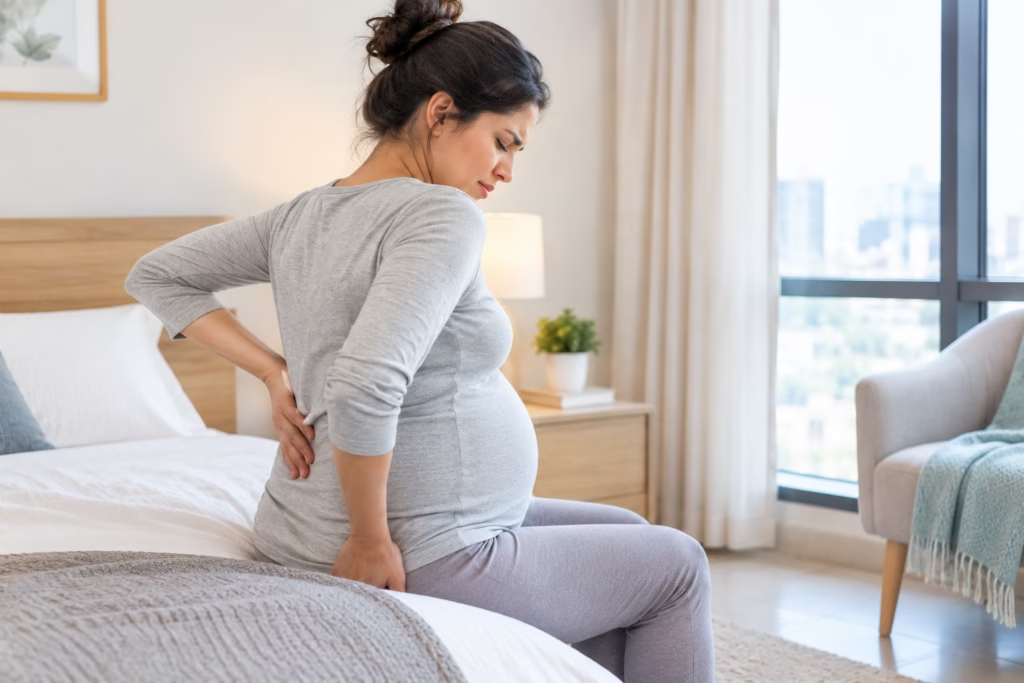
Typical early pregnancy back pain is a dull ache or stiffness in the lower back or pelvis, similar to muscle soreness. Back pain on its own is rarely a sign of miscarriage. The picture changes when the pain is severe, one-sided, or comes with bleeding, fever or urinary symptoms, which later sections cover.
Main Causes of Lower Back Pain in Early Pregnancy
Back pain in early pregnancy rarely has a single cause, because your body is adjusting to hormonal, physical and emotional changes all at once.
- Relaxin and progesterone: These hormones loosen ligaments and joints, which can strain the lower back before any visible physical change. Relaxin rises steadily through the first trimester and peaks around week 14.
- Posture and muscle changes: Your body begins adapting its alignment early, and the muscles supporting the spine can tire faster.
- Constipation and digestive discomfort: Gastrointestinal discomfort can lead to low back pain through increased abdominal muscle guarding. Constipation is common in early pregnancy.
- Stress and poor sleep: Worry, nausea and disrupted sleep raise muscle tension, which can make the back feel sore.
- Previous back problems: If you had back pain before pregnancy, it may flare, particularly if morning sickness or fatigue has reduced your usual exercise.
Understanding which of these factors applies to you is the first step toward relief, and your doctor or midwife can help you work out the cause if the pain persists.
Types of Pregnancy-Related Back Pain
Not all pregnancy back pain is the same. Location and pattern help identify the type.
Lumbar Pain vs. Pelvic Girdle Pain
Lumbar pain sits in the lower back, around or above the waistline, and feels like a dull ache that worsens with prolonged standing or sitting.
Pelvic girdle pain sits lower, across the buttocks, the back of the pelvis or the pubic area. It often feels worse when walking, climbing stairs, turning in bed or standing on one leg. It tends to become more noticeable as pregnancy progresses.
Sacroiliac (SI) Joint Pain
The SI joints connect the base of the spine to the pelvis. Ligament loosening can make them move more than usual, causing pain on one side of the lower back or buttock that may spread into the groin or thigh. Pain when rolling over or rising from a chair is typical.
Sciatica During Pregnancy
Sciatica causes sharp, shooting or burning pain from the lower back or buttock down one leg, sometimes with tingling. Soft tissue swelling can add mechanical pressure on nerves, causing thigh pain and referred pain in the lower back and pelvis. True sciatica is less common in the first trimester. Report leg weakness or numbness to your doctor.
Lower Back Pain as an Early Pregnancy Symptom: Can It Mean Something Else?
Back pain overlaps with several other conditions, so context matters.
Back Pain Before a Missed Period
Some women notice a dull lower backache in the days before a missed period. It can reflect early hormonal shifts, but it is not a reliable sign of pregnancy, since premenstrual symptoms cause the same ache. A pregnancy test is the only dependable way to find out.
Back Pain vs. Period Cramps
Period-related back pain typically comes with lower abdominal cramping and eases once bleeding starts. Early pregnancy back pain tends to be a milder, steadier ache that does not build into period-style bleeding. Light spotting can occur in early pregnancy, but any bleeding with pain should be assessed by your doctor.
Back Pain with Urinary Tract Infection or Kidney Issues
Urinary tract infections and kidney infections can cause lower back pain. Suspect this if back pain comes with burning when you urinate, frequent urination, cloudy or bad-smelling urine, fever or chills. Pain high on one side of the back, just under the ribs, may point to the kidney. Urinary infections need prompt treatment in pregnancy.
Warning Signs: When Back Pain Needs Medical Attention
Severe pain that does not improve with rest, pain with vaginal bleeding, fever with back pain, and difficulty urinating all need immediate attention. Contact your doctor or midwife straight away if you notice:
- Severe or worsening pain, especially on one side
- Vaginal bleeding or unusual discharge
- Fever, chills or pain when passing urine
- Dizziness, fainting or shoulder-tip pain
- Leg weakness, numbness or loss of bladder or bowel control
Severe lower back and groin pain can occur with a ruptured fallopian tube in an ectopic pregnancy. Sudden, severe, one-sided pain with bleeding or faintness is an emergency, so seek urgent care.
Professional Treatments for Pregnancy Back Pain
For most women, professional care is conservative and effective:
- Pregnancy-trained physiotherapy: Treatment includes tailored exercises, posture advice and manual therapy. Seeing a physical therapist with pregnancy expertise can help you troubleshoot pain and feel better in your body.
- Osteopathy or chiropractic care: Gentle manual treatment may ease muscle tension and joint stiffness. Choose a practitioner experienced with pregnancy and mention your pregnancy at booking.
- Maternity massage: Provided by a trained therapist, it can relieve muscle tightness.
- Support belts: Maternity belts can reduce lower back strain by giving gentle abdominal support, even early in pregnancy.
Share your symptoms with your doctor or midwife first, so serious causes can be ruled out before starting treatment.
Medications and Remedies: What Is Safe and What to Avoid
Most early pregnancy back pain can be managed without medication. Safer first steps include:
- Gentle walking, prenatal yoga or swimming
- Warm (not hot) compresses on the lower back
- Sleeping on your side with a pillow between the knees
- Sitting with lumbar support and changing position often
- Wearing supportive, flat or low-heeled shoes
Medication needs more care. Check with your doctor before taking any over-the-counter painkiller, because many common ones are not recommended during pregnancy. Paracetamol (acetaminophen) is generally the first-choice option when needed, at the lowest effective dose. Anti-inflammatories such as ibuprofen and aspirin are generally avoided unless a doctor advises otherwise. Also avoid hot tubs, saunas and heat on the abdomen, and check with your doctor before using herbal remedies or essential oils.
Final Thoughts
Lower back pain in early pregnancy is common and usually the result of hormones, posture and stress rather than a problem with the pregnancy itself. Gentle movement, good support and pregnancy-aware treatment help most women.
Trust your instincts, though. If the pain is severe, one-sided or comes with bleeding, fever or urinary symptoms, get medical advice without delay.
FAQs
Is Lower Back Pain An Early Sign Of Pregnancy?
It can be, as hormonal changes may cause an ache within the first few weeks. It is not a reliable sign on its own, since many other causes produce the same pain.
When Does Back Pain Start In Early Pregnancy?
For some women it starts as early as 4 to 8 weeks. Others only notice it later, as the bump grows.
Can Back Pain Be A Sign Of Miscarriage?
Back pain alone is rarely a sign of miscarriage. Contact your doctor if it comes with heavy bleeding, strong cramping or passing tissue.
How Do I Tell Pregnancy Back Pain From Period Pain?
Period pain usually comes with stronger cramps and builds to bleeding. Pregnancy back pain tends to be a steadier, milder ache, but a test is the only reliable way to tell.
Is It Normal To Have Back Pain Before A Missed Period?
It is common, but it can also be premenstrual. Take a pregnancy test once your period is late.
Can A Uti Cause Back Pain In Early Pregnancy?
Yes. Burning when urinating, fever or one-sided pain under the ribs should be checked promptly, as UTIs need treatment in pregnancy.
What Can I Take For Back Pain While Pregnant?
Paracetamol is generally considered the first-choice painkiller, but confirm with your doctor or pharmacist first. Avoid ibuprofen and aspirin unless prescribed.
Is It Safe To See An Osteopath Or Physiotherapist While Pregnant?
Generally yes, with a practitioner trained in pregnancy care. Tell them you are pregnant and check with your doctor first.
What Sleeping Position Is Best For Back Pain In Early Pregnancy?
Side-lying with a pillow between the knees is usually most comfortable. A pillow under the belly can add support as pregnancy progresses.
When Should I Worry About Back Pain During Pregnancy?
Seek urgent help for severe or one-sided pain, bleeding, fever, dizziness or urinary symptoms. If you are unsure, call your doctor or midwife.